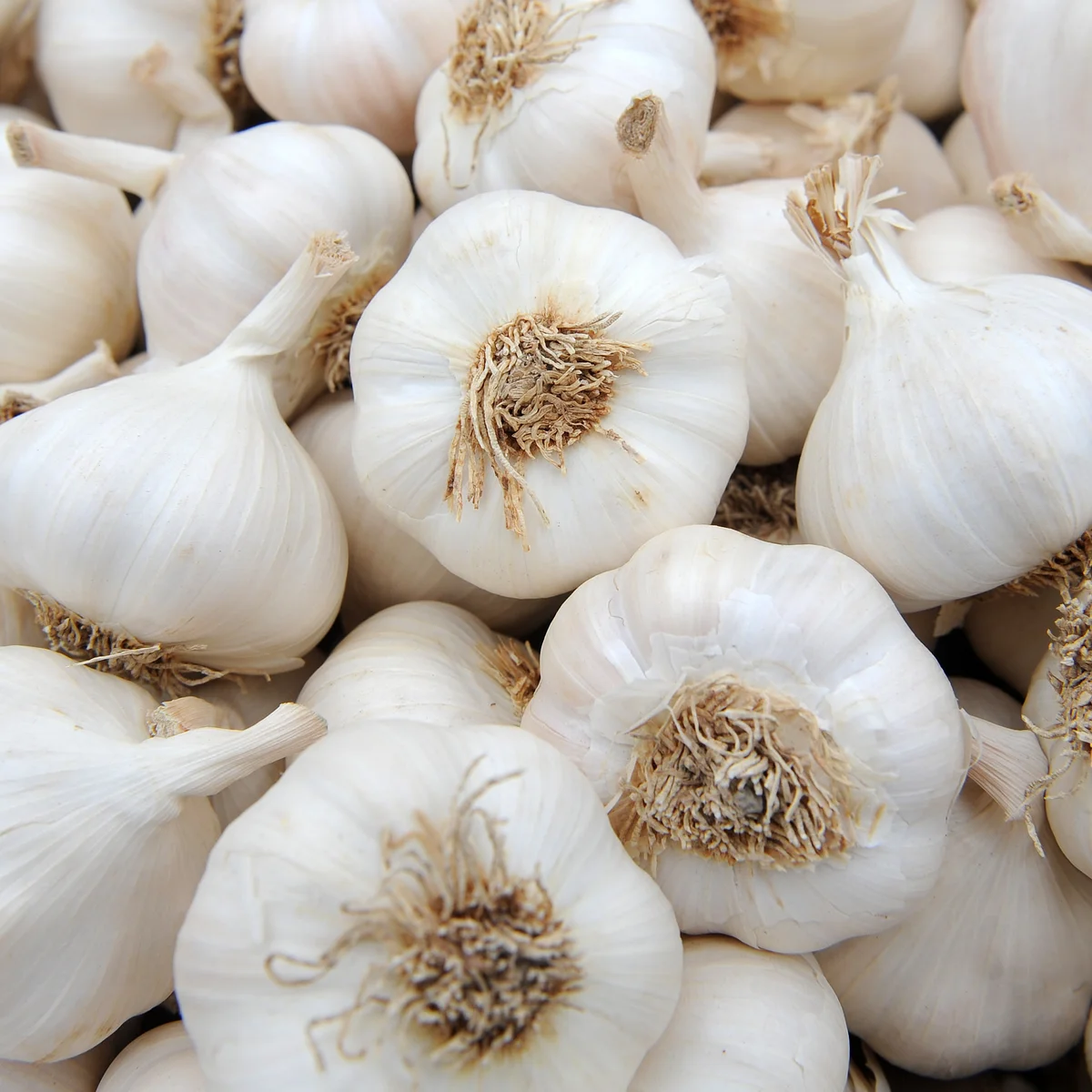
Description of Garlic:
Garlic (Allium sativum) is a small, bulbous plant widely known for its strong aroma, sharp flavor, and powerful medicinal properties. The garlic bulb is made up of several small sections called cloves, each wrapped in a thin papery skin. It grows underground, while its long, slender green leaves rise above the soil.
Garlic belongs to the onion family and has been used for thousands of years in cooking and traditional medicine. It has a pungent, spicy taste when raw and a rich, mellow flavor when cooked. Rich in antioxidants, vitamins, and natural compounds like allicin, garlic is valued for its health benefits, including boosting immunity and supporting heart health.
Versatile and aromatic, garlic remains an essential ingredient in kitchens and a respected natural remedy around the world.
Garlic (Allium sativum) is a species in the onion family used as a culinary herb and traditional remedy. It is known for its strong, pungent flavor and is valued for compounds like allicin, which has antimicrobial and antioxidant properties. Garlic is commonly used to support heart health by helping with high blood pressure, cholesterol, and hardening of the arteries.
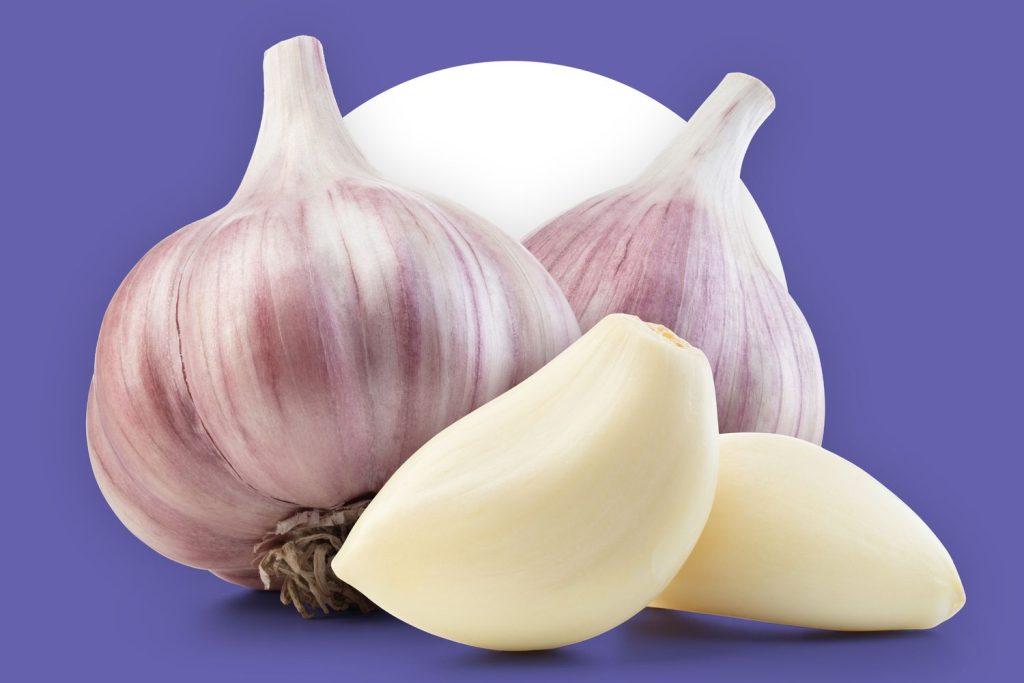
History of Garlic:
Garlic (Allium sativum) is one of the oldest cultivated plants in the world, with a history that spans more than 5,000–7,000 years. It originated in Central Asia, particularly around regions of modern-day Iran and Turkmenistan, and later spread to ancient civilizations across the globe.
Ancient Civilizations
- Ancient Egypt:
Garlic was highly valued by Egyptians. It was used as food, medicine, and even placed in the tombs of pharaohs. Workers who built the pyramids were fed garlic to increase strength and stamina. - Ancient China & India:
Garlic was used in traditional medicine thousands of years ago for treating digestive issues, infections, and respiratory problems. Chinese and Indian cultures recognized its healing properties early on. - Ancient Greece & Rome:
Greek soldiers and athletes ate garlic to boost courage and energy. Romans used it for strength and healing, especially for soldiers and workers.
Middle Ages
During the Middle Ages in Europe, garlic became an important medicinal herb. People believed it helped protect against infections, plague, and “evil spirits.” It was commonly used by healers and in household remedies.
Spread Across the World
Garlic spread to:
- Africa through trade routes
- Europe through Roman influence
- The Americas through Spanish explorers in the 1500s
By the 18th and 19th centuries, garlic became a staple in cooking, especially in Mediterranean and Asian cuisines.
Modern Era
Today, garlic is grown worldwide and is widely used in:
- Cooking for flavor
- Medicine for its antibacterial, antiviral, and heart-supporting properties
- Supplements for immunity and health
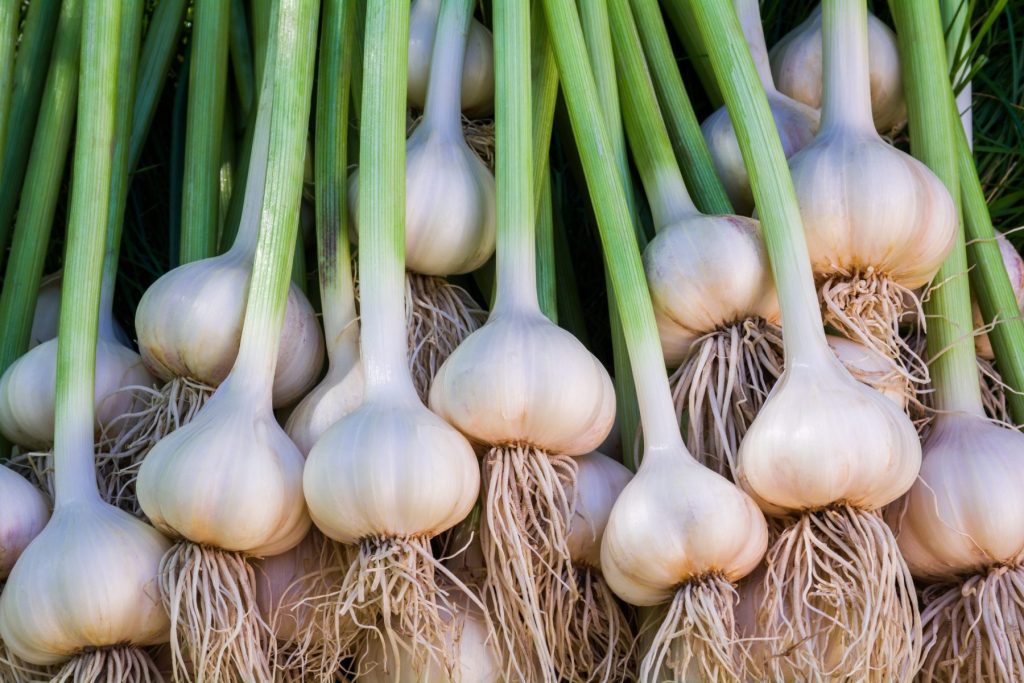
Types of Garlic:
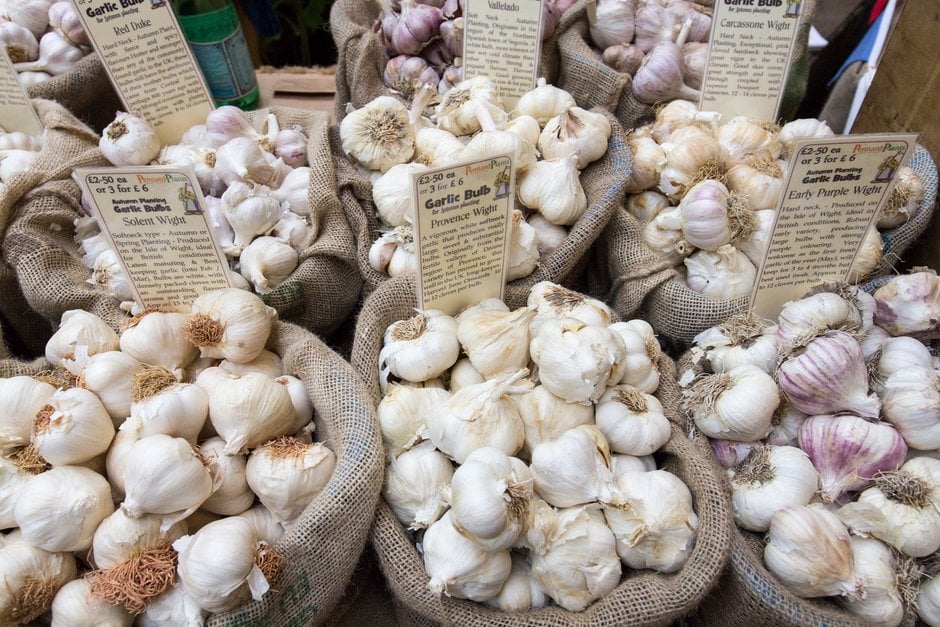
Garlic (Allium sativum) is generally divided into two main types: Hardneck and Softneck, with several varieties under each type.
1. Hardneck Garlic
- Produces a stiff central stalk
- Forms fewer but larger cloves
- Has a strong, robust flavor
- Easier to peel than softneck
- Popular varieties:
- Rocambole
- Porcelain
- Purple Stripe
2. Softneck Garlic
- Does not produce a central stalk
- Forms many small cloves
- Milder flavor, longer shelf life
- Ideal for braiding and storage
- Popular varieties:
- Silverskin
- Artichoke
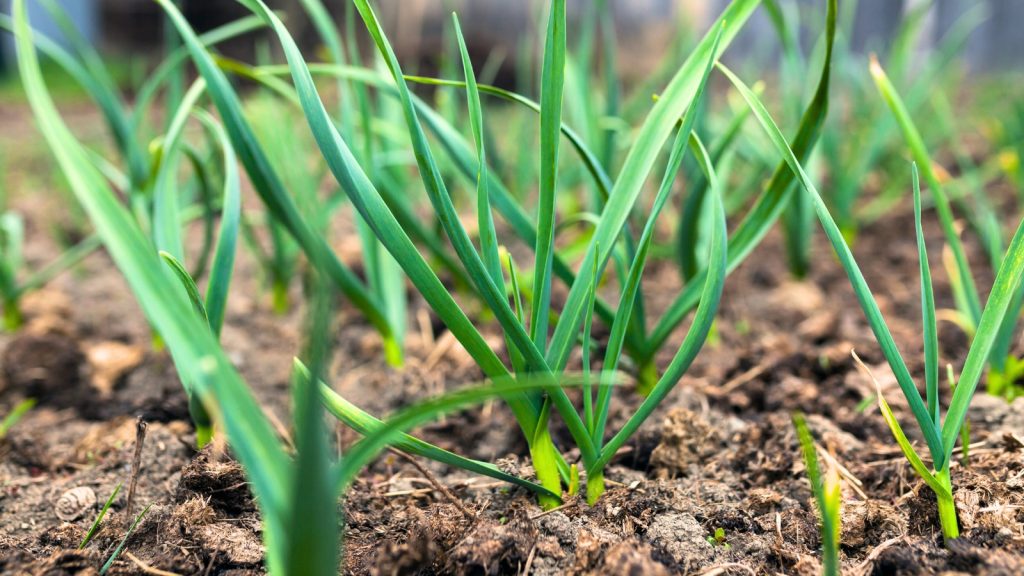
Other Types / Special Garlic:
- Elephant Garlic:
- Very large cloves
- Mild flavor (closer to leek than true garlic)
- Creole Garlic:
- Red or purple-skinned
- Rich, complex flavor
- Turban Garlic:
- Early maturing, small bulbs
- Often has purple stripes
Uses of Garlic:
1. Culinary Uses
- Adds flavor and aroma to a wide variety of dishes
- Used in cooking as raw, roasted, fried, or powdered
- Key ingredient in sauces, soups, stews, marinades, and dressings
- Used in pickles, bread, and spreads
2. Medicinal Uses
- Boosts immune system and helps fight colds and infections
- Lowers blood pressure and supports heart health
- Acts as an antibacterial, antifungal, and antiviral agent
- Helps regulate cholesterol levels
- Aids digestion and improves gut health
3. Agricultural Uses
- Natural pesticide and insect repellent in gardens
- Protects plants from certain fungal diseases
4. Cosmetic & Other Uses
- Sometimes used in hair care to strengthen hair
- Used in traditional remedies for skin conditions
- Can repel mosquitoes when applied in small amounts
About the Author