Description of Gazania:
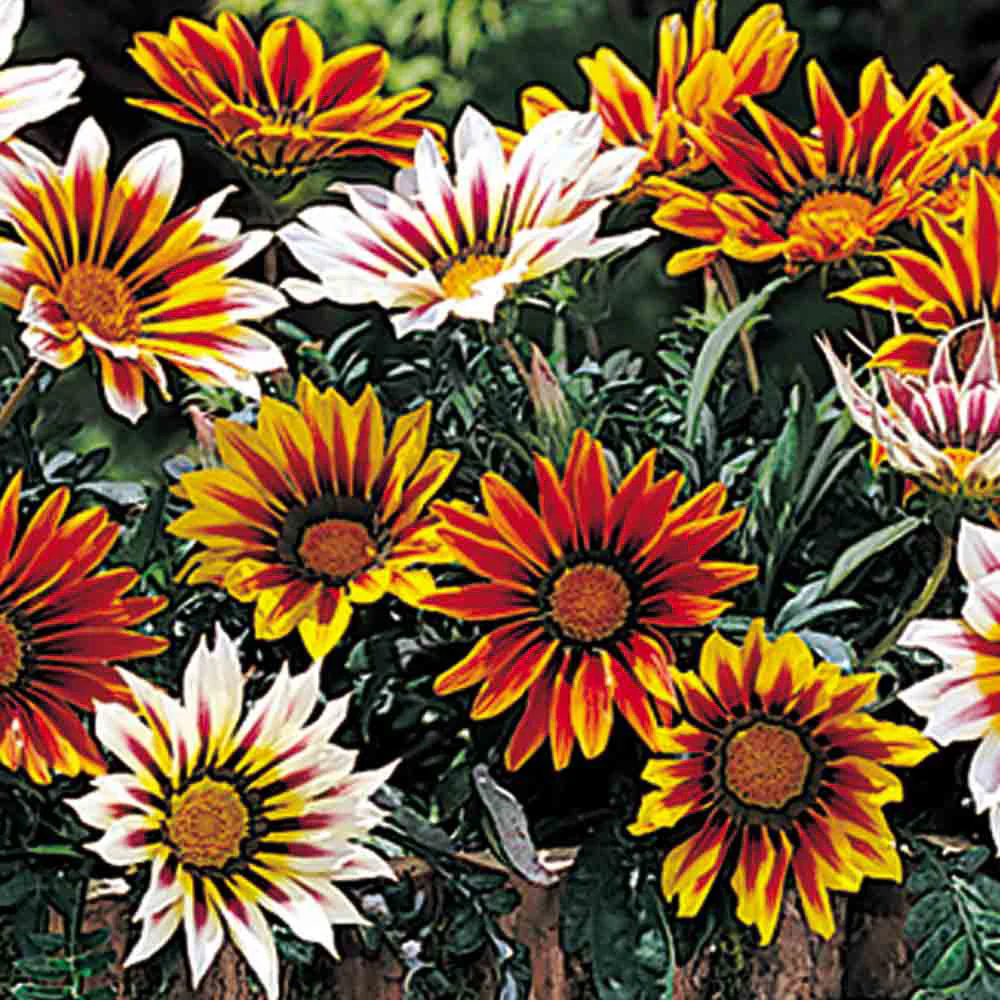
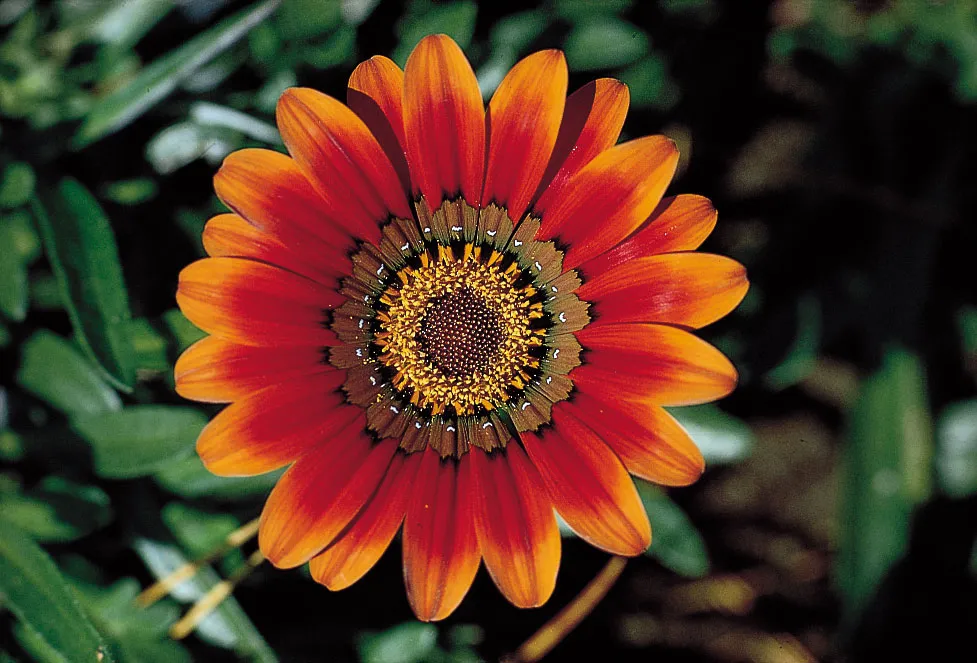
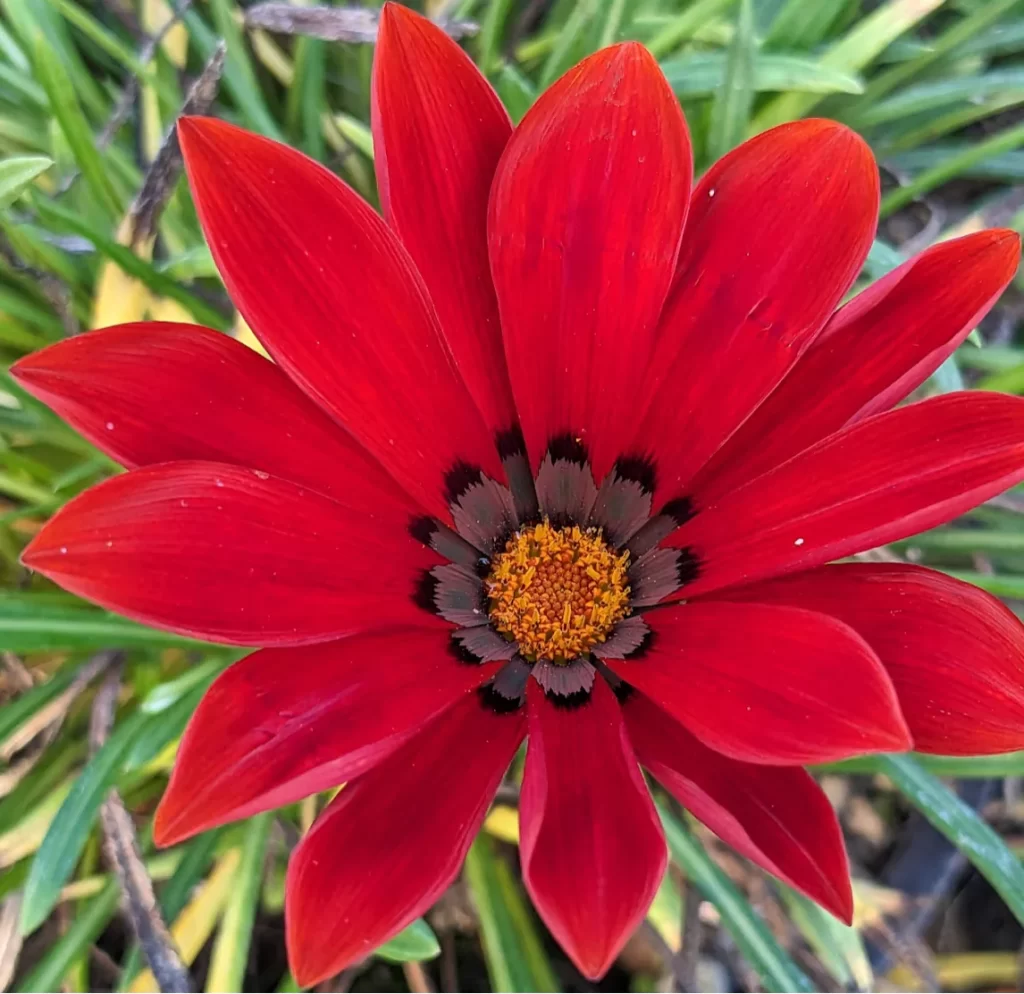
Gazania, commonly known as the Treasure Flower, is a vibrant and eye-catching flowering plant admired for its bold, daisy-like blooms. Native to South Africa, this hardy perennial features striking petals in shades of orange, yellow, red, pink, and white, often decorated with dramatic banding or contrasting centers. Gazania blooms open in bright sunlight and close in shade, giving gardens a lively, sun-loving charm. Its silvery-green foliage complements the vivid flowers, making it a popular choice for borders, rock gardens, and container planting. Known for its drought tolerance and ability to thrive in hot, dry conditions, Gazania is both low-maintenance and highly ornamental.
History of Gazania:
Gazania, also known as the Treasure Flower, has its origins in the sunny regions of South Africa and Mozambique. It belongs to the Asteraceae family—the same family as daisies and sunflowers. The plant was first documented in the 17th century and later introduced to Europe, where it quickly gained popularity for its striking colors and ability to thrive in warm, dry climates.
The genus Gazania was named in honor of Theodorus Gaza, a Greek-Italian humanist and translator who contributed greatly to botanical literature. By the 19th century, Gazania began spreading through horticultural trade, admired for its vivid, sunburst-like flowers and its resilience in challenging environments.
As breeders experimented with different varieties, many colorful hybrids were developed, expanding Gazania’s presence in global gardening. Today, it is widely grown in Mediterranean, tropical, and warm temperate regions, valued for its beauty, drought tolerance, and ability to flourish in poor soils.
Types of Gazania:
1. Gazania rigens (Treasure Flower)
The most widely cultivated species, known for its bold, daisy-like flowers in red, orange, yellow, and pink. It has silvery-green foliage and excellent heat and drought tolerance.
2. Gazania splendens
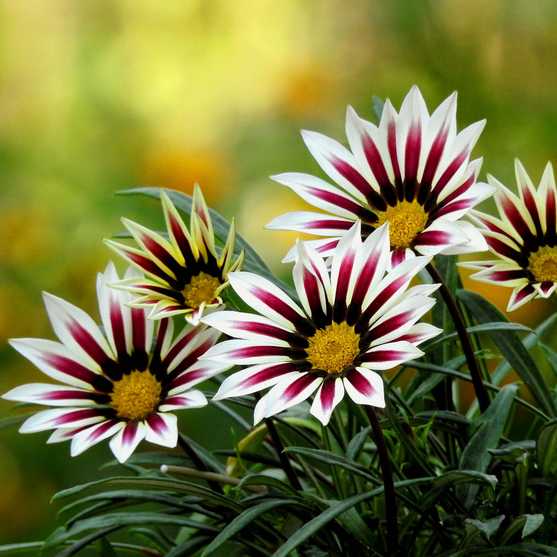
Known for its bright, vibrant petals with dramatic banding or striping. Often used in bedding and borders.
3. Gazania krebsiana
A hardy species with brilliant red or orange petals and a dark center. Common in rock gardens and dry landscapes.
4. Gazania linearis
Has narrower leaves and produces bright yellow flowers. It spreads easily, making it good ground cover.
5. Gazania uniflora
A rarer species with single yellow blooms and more delicate growth. Mostly found in coastal or sandy areas.
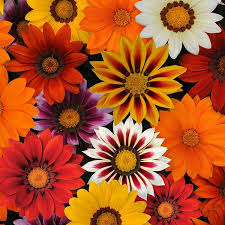
6. Hybrid Gazanias
Many colorful hybrids have been developed for ornamental use. Popular series include:
- Gazania ‘Daybreak Series’ – Large blooms in bold color patterns.
- Gazania ‘Sunshine Series’ – Bright yellow and orange blooms.
- Gazania ‘Big Kiss Series’ – Extra-large flowers with striking markings.
- Gazania ‘Talent Series’ – Known for its silver foliage and vibrant blooms.
Uses of Gazania:
Gazania is valued for both decorative and practical purposes. Here are its main uses:
1. Garden Decoration
Gazanias are widely used in gardens for their bright, colorful blooms. They add vibrant hues to:
- Flower beds
- Borders
- Rock gardens
- Pathways
- Ground cover areas
2. Drought-Tolerant Landscaping
Because they thrive in hot, dry conditions, Gazanias are ideal for:
- Xeriscaping
- Dry slopes
- Coastal gardens
- Low-water landscaping projects
3. Erosion Control
Certain spreading varieties help cover bare soil, reducing erosion on:
- Slopes
- Sandy areas
- Loose garden soil
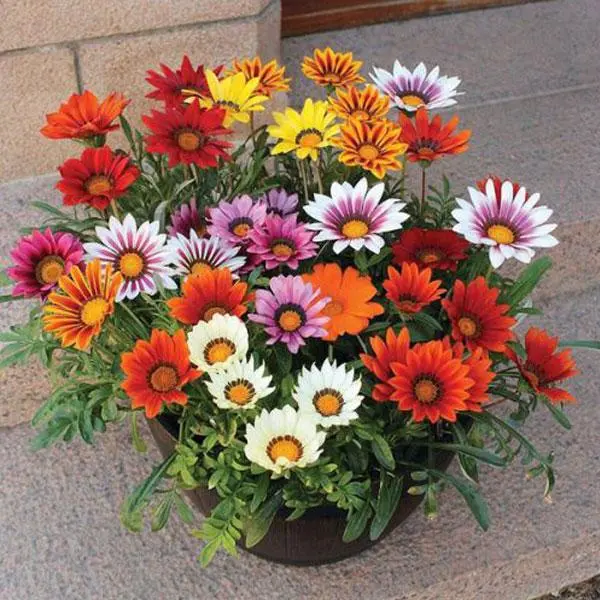
4. Container and Pot Planting
Their compact form and long blooming season make them perfect for:
- Pots
- Hanging baskets
- Patio containers
5. Pollinator Attraction
Gazanias attract beneficial insects such as:
- Bees
- Butterflies
This helps support garden pollination.
6. Decorative Ground Cover
Hybrid gazanias that spread quickly are used as a living carpet, giving a colorful cover that requires minimal maintenance.
About the Author