Description of Daffodil
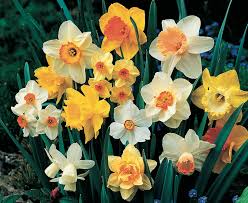
The daffodil (Narcissus) is a bright, cheerful flowering plant known for its trumpet-shaped blooms and vibrant yellow or white petals. It is a spring-blooming bulb, often one of the first flowers to appear after winter, symbolizing renewal, hope, and new beginnings.
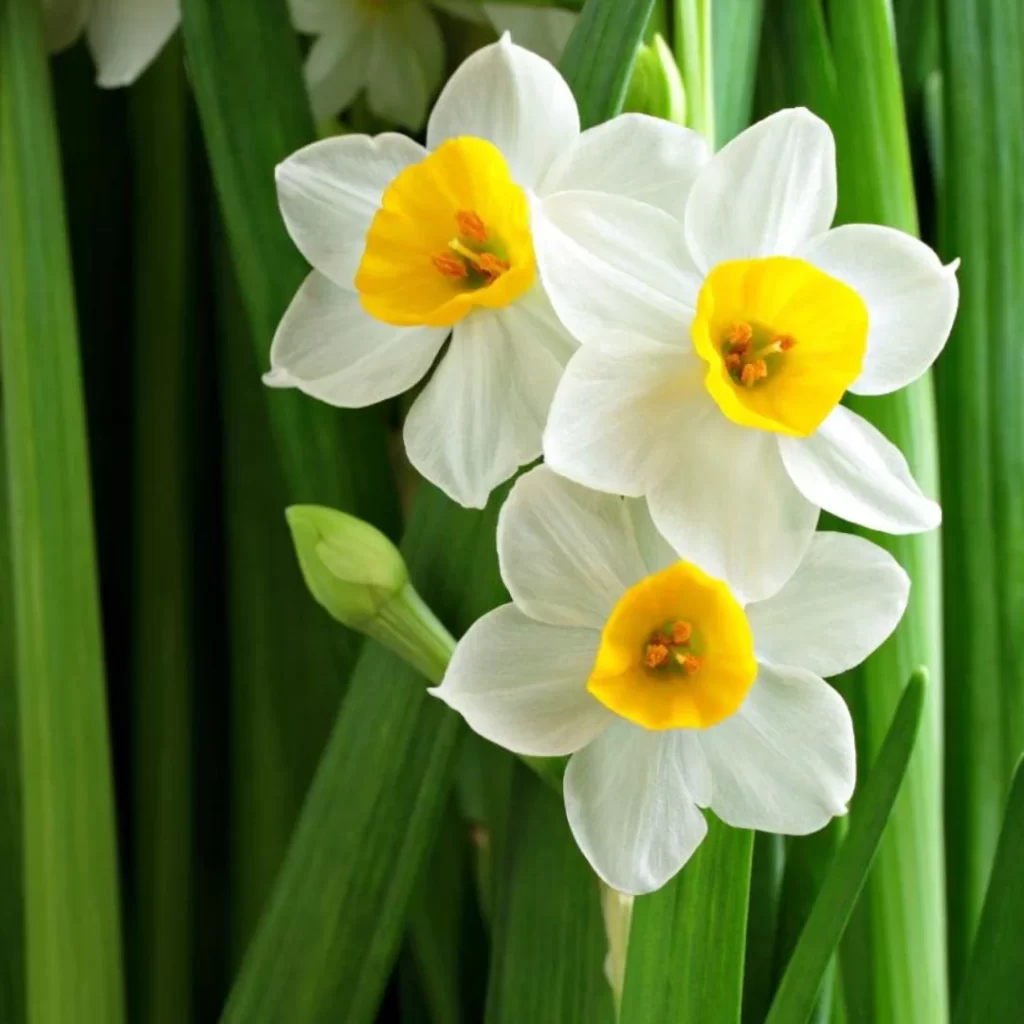
Daffodils have long, slender green leaves and a central corona (the trumpet) surrounded by six petal-like tepals. They thrive in well-drained soil and sunny to partially shaded areas. Beyond their ornamental beauty, daffodils are often used in gardens, bouquets, and public landscaping for their vibrant color and early bloom.
They also hold cultural significance, representing rebirth, prosperity, and resilience, and are widely celebrated in festivals and spring-themed decorations around the world.
History of Daffodil
The daffodil has a rich history that spans ancient civilizations, mythology, and European horticulture.
1. Ancient Origins
- Daffodils are native to Europe, North Africa, and Western Asia.
- They were known to the ancient Greeks and Romans, who associated them with mythology and medicine.
2. Greek Mythology
- The daffodil is linked to the Greek myth of Narcissus, a young man who fell in love with his reflection. The flower is said to have grown where he perished, symbolizing self-love and rebirth.
3. Medicinal Uses
- Ancient civilizations sometimes used daffodils for medicinal purposes, such as treating wounds and respiratory issues.
- The bulbs contain compounds that were historically used in traditional remedies (though they are toxic if consumed improperly).
4. European Cultivation
- In 16th- and 17th-century Europe, daffodils were cultivated widely in gardens for their ornamental beauty.
- They became a symbol of spring and new beginnings, celebrated in art, poetry, and festivals.
5. Modern Significance
- Today, daffodils are a global symbol of hope and renewal.
- They are also associated with cancer awareness in some countries, representing resilience and optimism.
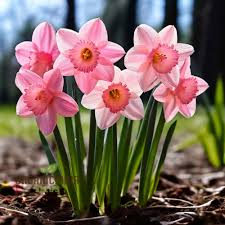
Types of Daffodil
The daffodil (Narcissus) has many types, classified based on flower shape, size, and color. Here are the main types:
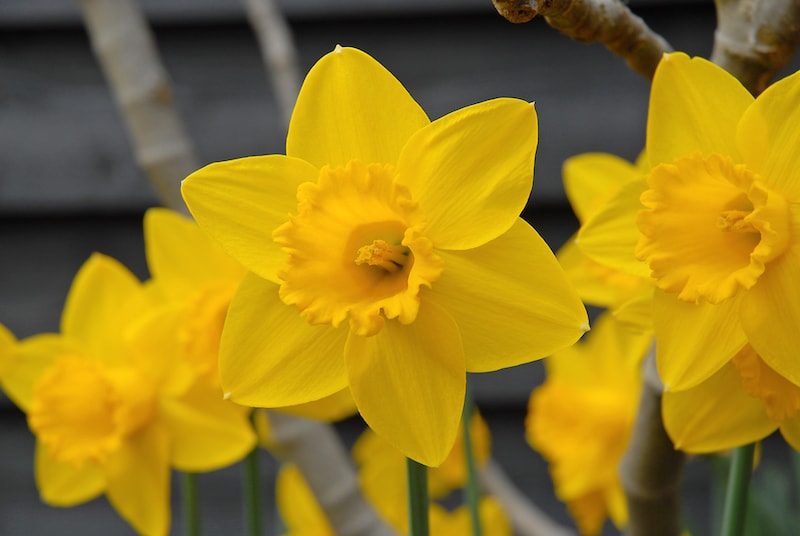
1. Trumpet Daffodils
- Large, trumpet-shaped corona longer than the petals.
- Classic daffodil look, often bright yellow.
2. Large-Cupped Daffodils
- Corona (cup) is more than one-third but less than equal to the petal length.
- Comes in combinations of yellow, white, or orange.
3. Small-Cupped Daffodils
- Corona is less than one-third the length of the petals.
- Often delicate, elegant blooms in soft colors.
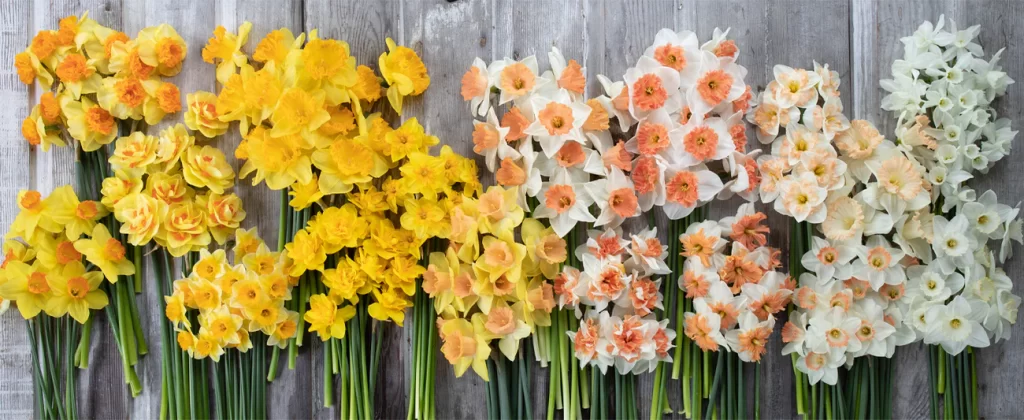
4. Double Daffodils
- Flowers have multiple layers of petals, giving a fuller, ruffled appearance.
- Usually cultivated for ornamental purposes.
5. Triandrus Daffodils
- Nodding, bell-shaped flowers, often with multiple blooms per stem.
- Typically white or pale yellow.
6. Cyclamineus Daffodils
- Reflexed petals with a small, elongated corona.
- Usually early bloomers and very hardy.
7. Jonquilla Daffodils
- Fragrant, small blooms with multiple flowers per stem.
- Yellow or white with a short cup.
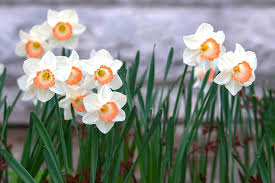
8. Tazetta Daffodils
- Clusters of highly fragrant flowers.
- Often white with a yellow cup; ideal for indoor forcing.
9. Poeticus Daffodils
- White petals with a small yellow cup edged in red.
- Known for fragrance and elegance.
Uses of Daffodil
Here’s a detailed overview of the uses of daffodil (Narcissus) flowers:
1. Ornamental Uses
- Widely grown in gardens, parks, and landscapes for their bright, cheerful blooms.
- Popular in flower beds, borders, and water gardens.
- Used in bouquets and floral arrangements for decoration.
2. Symbolic and Cultural Uses
- Symbol of spring, renewal, hope, and new beginnings.
- Often featured in art, literature, and festivals celebrating spring.
- Associated with cancer awareness campaigns in some countries, symbolizing resilience and hope.
3. Fragrance
- Certain types, like Tazetta and Poeticus, are grown for their sweet fragrance, used in perfumes and scented products.
4. Medicinal Uses (Traditional)
- Historically, daffodil extracts were used in folk medicine for ailments like respiratory issues.
- Modern research has explored compounds in daffodils for potential treatment in neurological conditions, though the bulbs are toxic if ingested improperly.
5. Environmental Uses
- Daffodils are naturalizing plants, helping prevent soil erosion and adding biodiversity to gardens.
- Deer and rodents usually avoid them, making them useful in protecting other plants.
The daffodil is thus valued not only for its beauty but also for cultural symbolism, fragrance, and practical gardening benefits.
About the Author