Description of Dahlia:
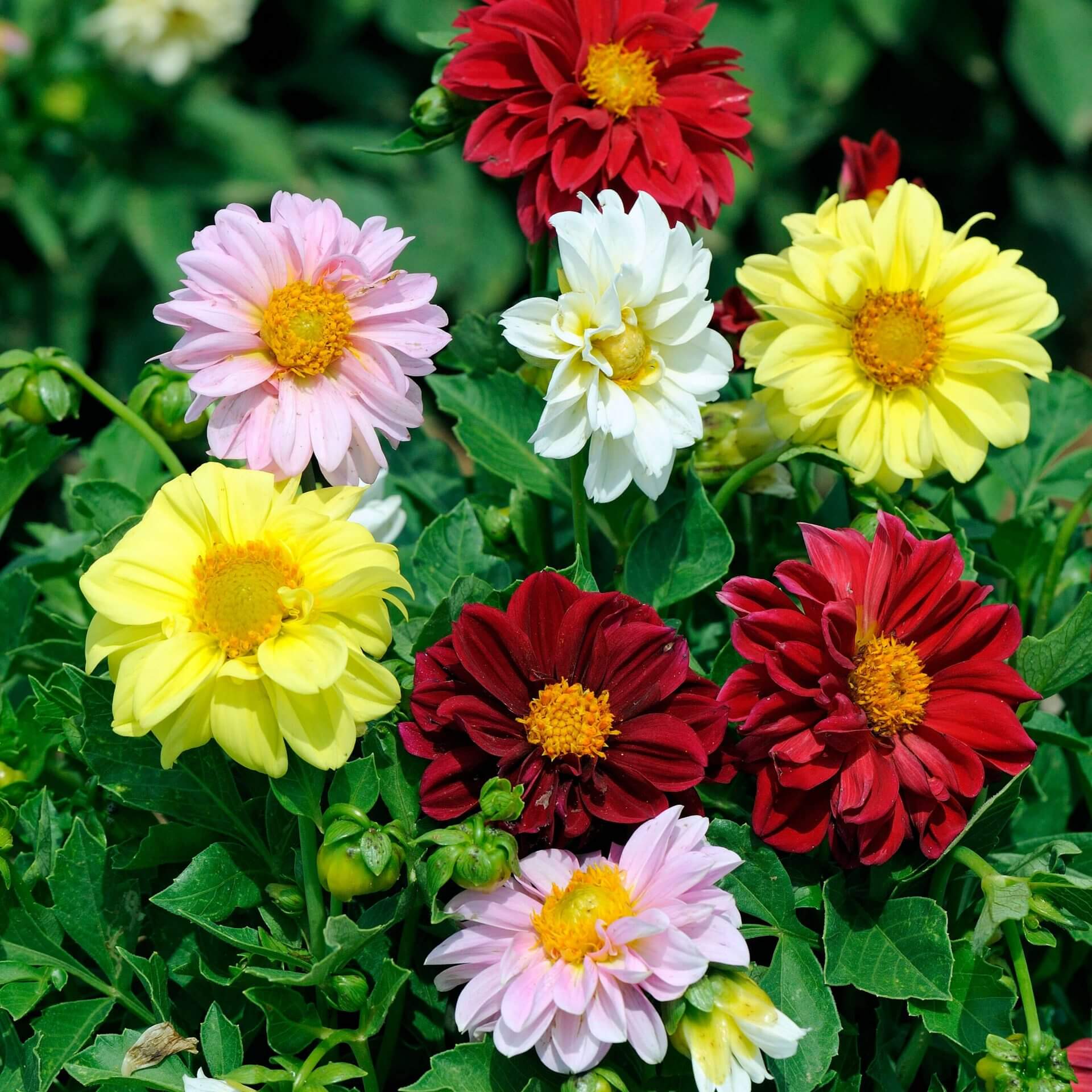
Dahlia is a vibrant and ornamental flowering plant belonging to the Asteraceae family. Native to Mexico and Central America, dahlias are known for their strikingly colorful and diverse blooms, which can range from small, delicate flowers to large, dramatic blossoms. They come in a wide variety of shapes, including pompom, cactus, waterlily, and single-flowered forms, with colors spanning red, pink, yellow, orange, purple, white, and even bi-colored combinations.
Dahlias are tuberous perennials, meaning they grow from underground tubers that store nutrients for the plant. They thrive in sunny locations with well-drained soil and regular watering. Typically blooming from midsummer to the first frost, dahlias are popular in gardens, floral arrangements, and ornamental landscaping because of their long-lasting and eye-catching flowers.
These flowers also carry symbolic meanings, often representing elegance, dignity, and commitment. With over 42 species and thousands of cultivated varieties, dahlias are celebrated for their diversity, beauty, and versatility in gardens around the world.
History of Dahlia:
The Dahlia flower has a rich and colorful history that dates back hundreds of years. It is native to Mexico and Central America, where it grew wild in the mountains and was first cultivated by the Aztecs. They valued the plant not only for its beauty but also for its practical uses—its hollow stems were used to carry water, and some varieties were even eaten as a food source.
In the 16th century, Spanish explorers discovered dahlias during their travels in Mexico. They were fascinated by the flower’s bright colors and unique shape. By the late 1700s, dahlias were brought to Europe, starting in Spain and later spreading to France, England, and the Netherlands. European botanists began experimenting with breeding, which resulted in many new varieties and colors.
The flower was named “Dahlia” in honor of Swedish botanist Anders Dahl, a student of the famous scientist Carl Linnaeus. During the 19th century, the popularity of dahlias grew rapidly. Gardeners loved them for their wide range of shapes and vibrant colors, leading to the creation of thousands of hybrids.
Today, dahlias are grown all around the world and are especially popular in gardens, flower shows, and floral arrangements. They symbolize elegance, inner strength, creativity, and dignity.
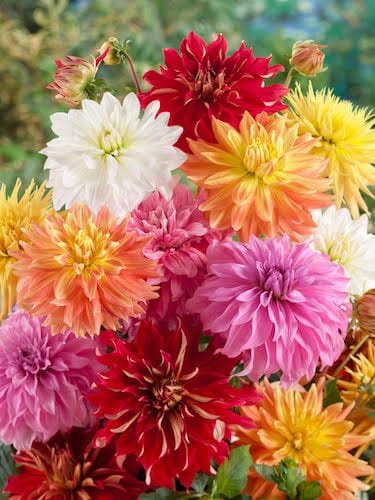
Types of Dahlia:
1. Single Dahlias
- Description: Feature a single row of petals with a central disc, similar to daisies.
- Size: Small to medium blooms.
- Use: Great for borders and cut flowers.
2. Anemone Dahlias
- Description: Have one or more rows of flat petals surrounding a raised, dense central “button” of tubular petals.
- Use: Eye-catching in bouquets and garden beds.
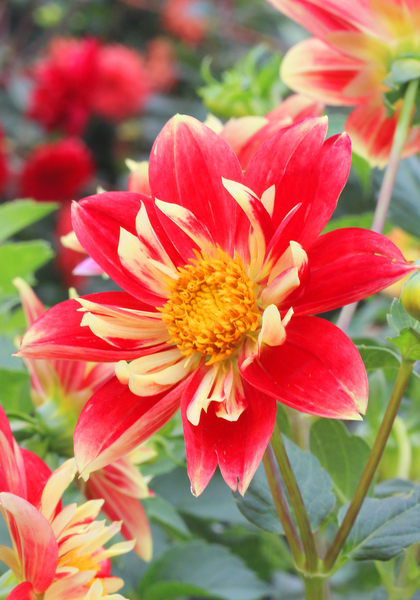
3. Collarette Dahlias
- Description: Single row of outer petals with an inner collar of smaller petals around the central disc.
- Use: Adds unique texture and elegance to floral arrangements.
4. Waterlily Dahlias
- Description: Broad, flat petals arranged in layers resembling a waterlily flower.
- Size: Medium to large blooms.
- Use: Ideal for show gardens and cut flowers.
5. Cactus Dahlias
- Description: Narrow, pointed, and rolled petals giving a spiky appearance.
- Varieties: Includes “semi-cactus” with slightly less pointed petals.
- Use: Dramatic garden display.
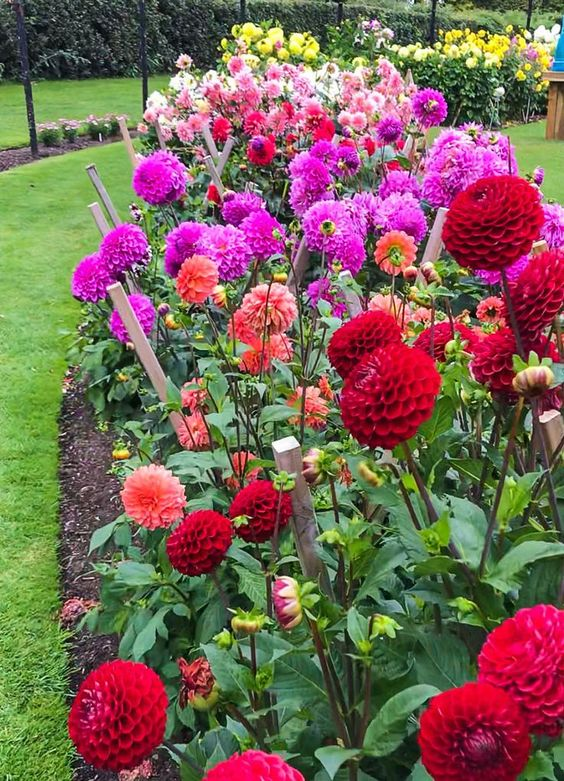
6. Ball and Pompon Dahlias
- Ball Dahlias: Fully double, rounded blooms, often 4–5 inches across.
- Pompon Dahlias: Smaller, perfectly round, tightly packed blooms, usually less than 2 inches across.
- Use: Excellent for mass planting and decorative bouquets.
7. Decorative Dahlias
- Description: Fully double blooms without a central disc, petals broad and often slightly curved or twisted.
- Size: Medium to very large.
- Use: Stunning as focal points in gardens and floral shows.
8. Miscellaneous / Specialty Dahlias
- Includes “peony-flowered,” “fluted,” and “novelty” types, which may combine features of other types for unique textures and colors.
Uses of Dahlia:
1. Ornamental Use
- Dahlias are widely grown in gardens, parks, and landscapes for their vibrant and diverse blooms.
- They add color, texture, and visual interest, making them a favorite for borders, flower beds, and decorative hedges.
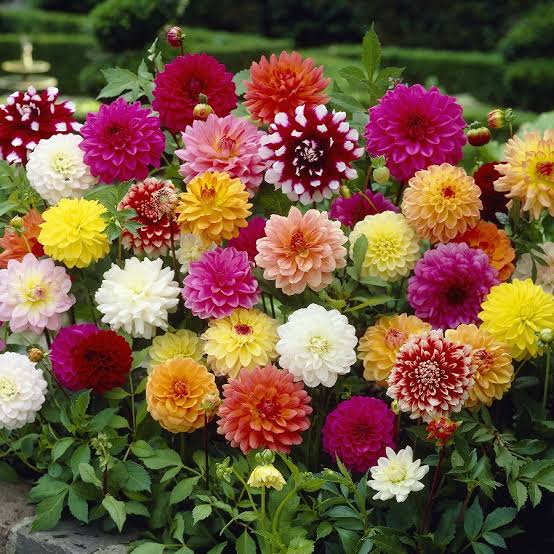
2. Cut Flowers
- Dahlias have long-lasting blooms, making them perfect for floral arrangements, bouquets, and vases.
- Popular in weddings, parties, and special events because of their striking colors and shapes.
3. Shows and Competitions
- Many varieties are cultivated specifically for flower shows and competitions due to their size, symmetry, and color diversity.
4. Medicinal Uses (Traditional)
- In some cultures, dahlias were historically used for digestive health and minor ailments, though they are mostly ornamental today.
5. Culinary Use
- Certain dahlia tubers are edible and have been used as a root vegetable in parts of Mexico.
- Tubers are rich in inulin, a natural sugar suitable for diabetics.
6. Symbolic and Cultural Significance
- Dahlias symbolize elegance, dignity, and commitment.
- They are often used in celebrations, rituals, and decorative motifs.
7. Pollinator Attraction
- Dahlias attract bees, butterflies, and other pollinators, making them beneficial for garden biodiversity.
About the Author