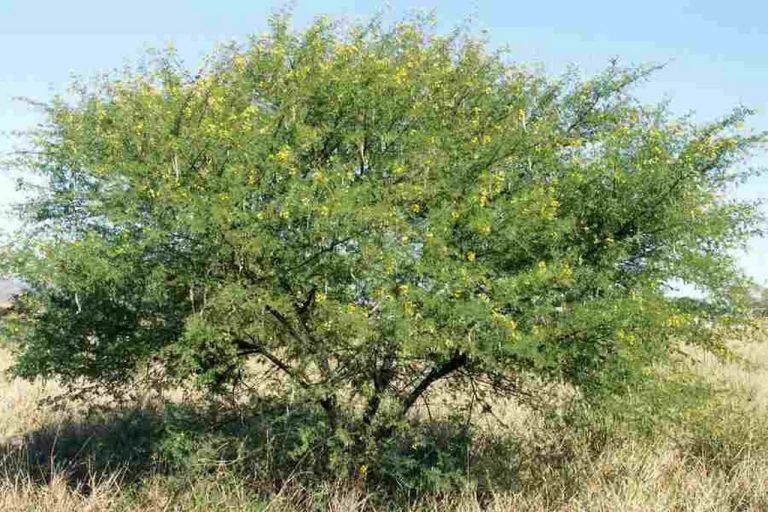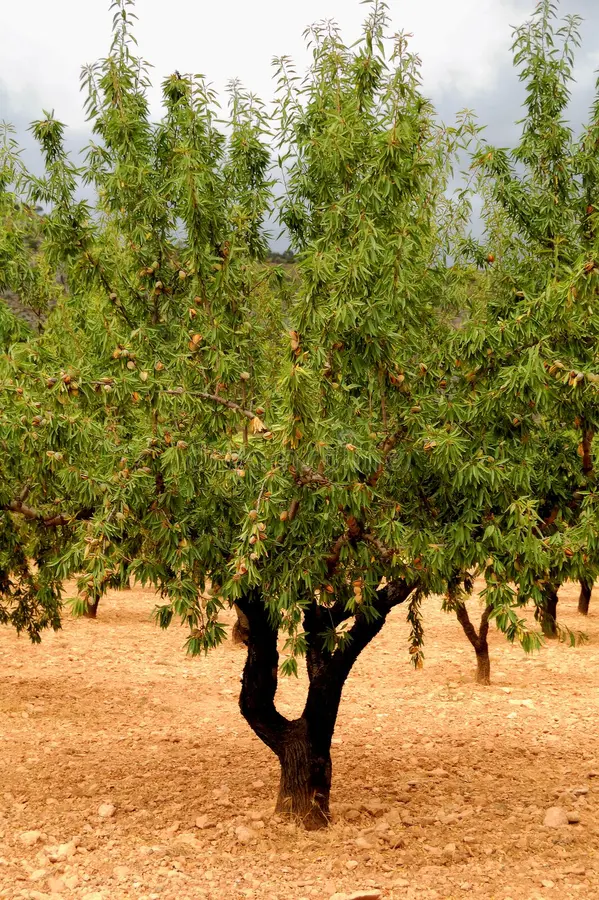
Description of Almond Tree:
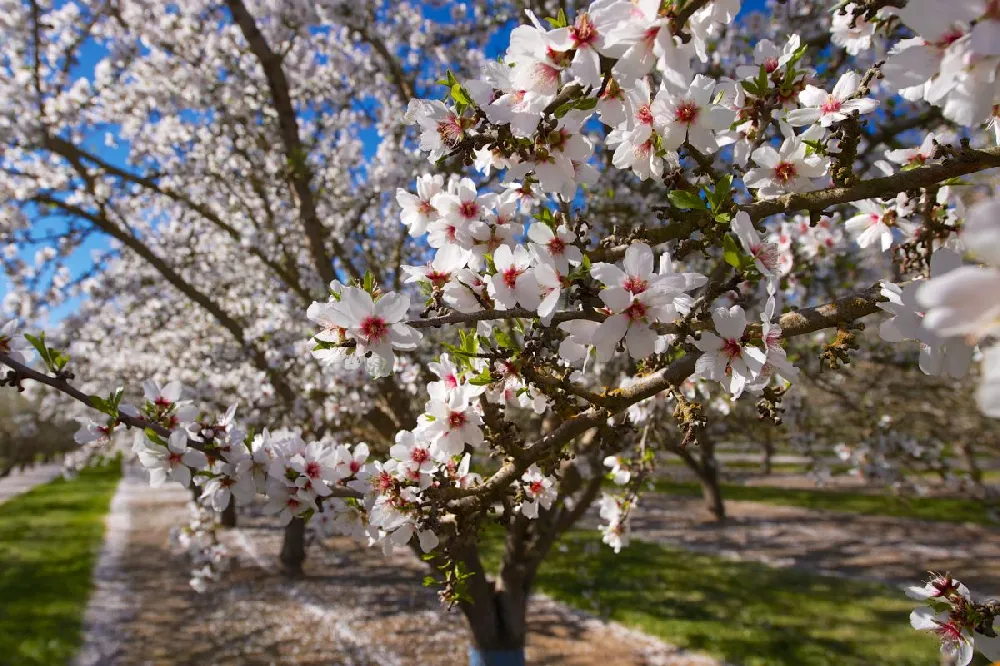
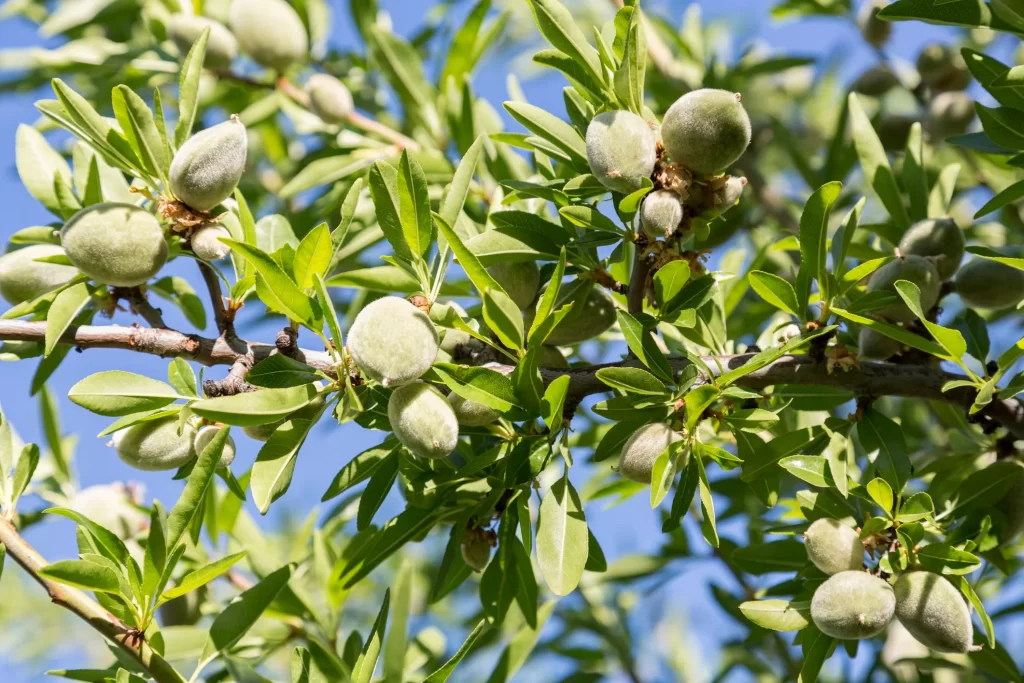
The almond tree is a medium-sized, deciduous tree known for its beautiful pinkish-white blossoms that appear in early spring. It has slender branches, lance-shaped green leaves, and a smooth grayish bark. The tree produces a hard-shelled fruit that contains the edible almond seed, valued worldwide for its rich taste and nutritional benefits. Almond trees thrive in warm, dry climates and are commonly cultivated in orchards. Their early blooming flowers make them one of the first signs of spring, adding charm and elegance to the landscape.
History of the Almond Tree:
The almond tree has a long and rich history that dates back thousands of years. It is believed to have originated in the regions of Central and Western Asia, including Iran and surrounding areas. Almonds were among the earliest domesticated fruit trees, with evidence of cultivation found as far back as 2000–3000 BCE.
The ancient Egyptians, Greeks, and Romans valued almonds highly for their taste, nutrition, and symbolic meanings. Almonds were even discovered in the tomb of Tutankhamun, showing their importance in ancient cultures. Traders along the Silk Road helped spread almond cultivation across the Middle East and into Europe.
By the Middle Ages, almonds had become a staple ingredient in European cooking. Later, Spanish missionaries introduced almonds to the Americas, especially California, which is now one of the world’s largest almond-producing regions.
Today, the almond tree stands as a symbol of prosperity, hope, and early spring, cherished for both its beauty and its valuable nut.
Types of Almond Trees:
- Sweet Almond (Prunus dulcis var. dulcis)
- The most common type grown for edible almonds.
- Seeds are sweet and safe to eat.
- Used for snacks, oil, milk, and desserts.
- Bitter Almond (Prunus dulcis var. amara)
- Produces bitter seeds that contain natural toxins (amygdalin).
- Not eaten raw; mainly used for almond extract, oils, and flavoring after processing.
- Nonpareil Almond
- A popular commercial sweet almond variety.
- Thin shell, smooth surface, and high kernel quality.
- Easy to blanch and widely used in food products.
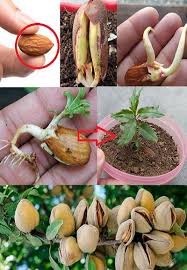
4 Carmel Almond
- Soft-shell sweet almond variety.
- Long, narrow kernels and excellent flavor.
- Commonly used in confectionery.
5 Mission Almond
- Hard-shell variety with strong flavor.
- Often used for roasting and seasoning.
6 Sonora Almond
- Early-blooming, long and thin almonds.
- Popular in commercial orchards for their high yield.
7 Texas Almond
- Hard-shell sweet almond variety.
- Known for its robust flavor and sturdy shell.
Uses of Almond Tree:
- Edible Almonds
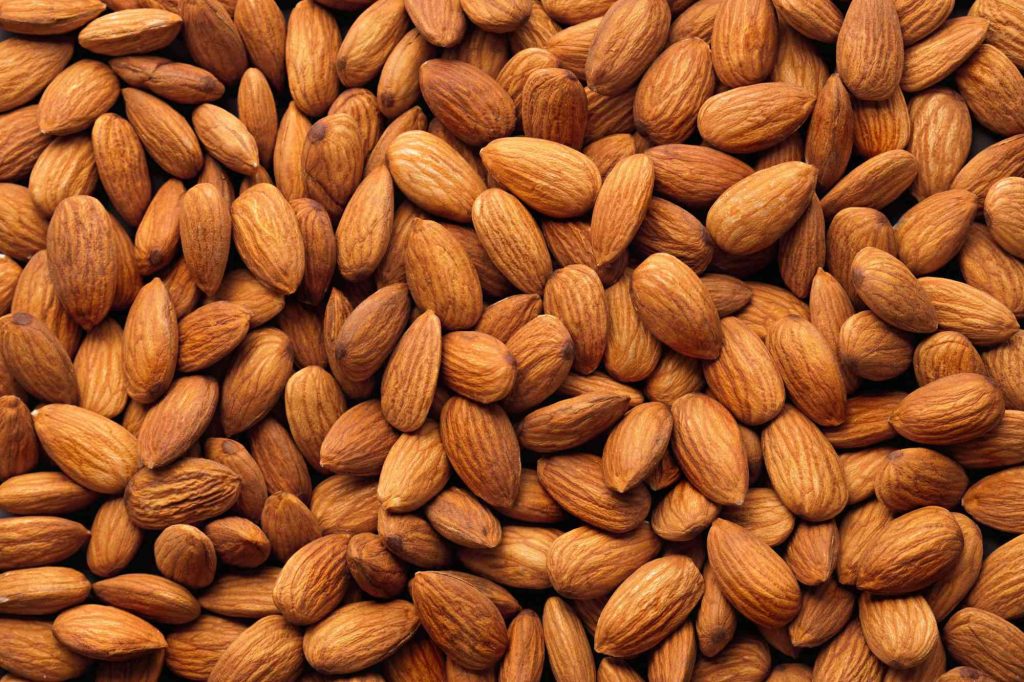
- The seeds (almonds) are eaten raw, roasted, or salted.
- Used in sweets, chocolates, desserts, and bakery items.
- Almond Oil
- Extracted from sweet almonds.
- Used in cooking, skincare, massage oils, and hair care products.
- Almond Milk
- A healthy, plant-based milk alternative.
- Commonly used in beverages, cereals, and baking.
- Wood Uses
- Almond tree wood is used for small woodcrafts, tools, and decorative items.
- Cosmetic & Skincare Products
- Almond oil is used in creams, lotions, soaps, and moisturizers for its nourishing properties.
- Medicinal Uses
- Almonds support heart health, brain function, digestion, and energy.
- Traditional medicine uses almond oil for skin and body massage.
7 Environmental Uses
- Almond trees help prevent soil erosion.
- They also beautify gardens with their early spring blossoms.
8 Culinary Uses
- Used in almond butter, almond flour, marzipan, and bakery recipes
Benefits of the Almond Tree:
- Nutrient-Rich Almonds
- Almonds are packed with vitamin E, magnesium, healthy fats, protein, and fiber.
- They support overall health and are considered a superfood.
- Heart Health
- Regular consumption of almonds helps reduce bad cholesterol (LDL).
- Promotes a healthy heart due to antioxidant and healthy fat content.
- Supports Brain Function
- Almonds are known to boost memory and improve cognitive health.
- Often recommended for students and older adults.
- Improves Skin & Hair Health
- Almond oil nourishes skin, reduces dryness, and gives a natural glow.
- Strengthens hair roots and promotes hair growth.
5 Boosts Immunity
- Rich vitamin E and antioxidants help strengthen the body’s immune system.
6 Regulates Blood Sugar
- Almonds have a low glycemic index and help control blood sugar levels.
- Beneficial for people with diabetes when consumed moderately.
7 Good for Digestion
- Almonds contain dietary fiber that helps improve digestion and prevent constipation.
8 Weight Management
- High in protein and healthy fats, almonds keep you full for longer.
- Helps in healthy weight control.
9. Environmental Benefits
- The almond tree improves soil quality and reduces erosion.
- Its blossoms support pollinators like bees.
About the Author